
IN
Inlay
An inlay generally restores a more limited area within the tooth. It fits into the prepared cavity and replaces missing structure without covering the entire upper surface of the tooth.
Custom-made ceramic inlays and onlays can restore teeth that have lost too much structure for a conventional filling while helping preserve as much healthy natural tooth tissue as possible.
When a tooth has extensive decay or has lost a substantial amount of structure, a conventional filling may not always provide the most suitable restoration.
Inlays and onlays are indirect restorations. Instead of being shaped entirely inside the mouth, they are custom-made outside the mouth according to the prepared tooth and then bonded into position.
Their purpose is to replace damaged or missing tooth structure while preserving healthy enamel and dentine whenever clinically appropriate.
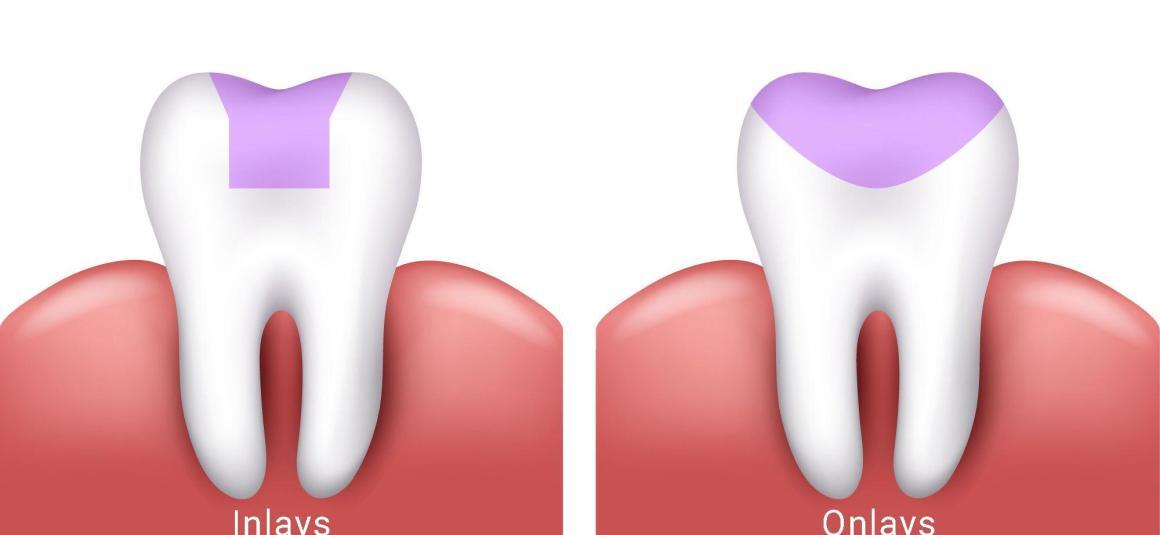
Both restorations are custom-made, but they cover different amounts of the tooth depending on how much structure needs to be restored.
An inlay generally restores a more limited area within the tooth. It fits into the prepared cavity and replaces missing structure without covering the entire upper surface of the tooth.
An onlay is used when a larger part of the chewing surface requires restoration. It can extend over one or more areas of the upper tooth while still preserving healthy structure that does not require coverage.
When removing decay leaves a larger cavity than a conventional filling can predictably restore.
Teeth with substantial material loss may require additional structural support while preserving remaining healthy tissue.
Selected large or ageing restorations may be replaced with an indirect ceramic restoration when appropriate.
Some teeth that have undergone root canal treatment may require additional restorative support depending on the amount of healthy structure remaining.
Inlays and onlays may be considered when a filling is not sufficient but complete crown coverage is not required.
They are commonly considered for back teeth where chewing forces and access can make larger restorations more demanding.
The existing treatment approach describes a laboratory-made restoration completed over two clinical sessions.
Local anaesthesia may be used before decay, damaged tissue or unsuitable restorative material is carefully removed.
The prepared tooth is accurately measured so the final restoration can be customised to the remaining healthy dental structure.
The ceramic inlay or onlay is produced outside the mouth according to the measurements and shape of the prepared tooth.
During the second session, the custom-made restoration is checked and bonded securely to the prepared tooth.
Both are tooth-coloured restorative options, but the way they are made and the situations in which they are used differ.
One of the reasons an inlay or onlay may be selected is to restore a substantially damaged tooth without automatically covering the entire tooth with a crown. The dentist can evaluate how much healthy structure remains and select the restorative approach that is appropriate for the individual tooth.
If you have a damaged tooth, a large filling or significant tooth structure loss, our dental team can assess whether a composite filling, ceramic inlay, onlay or another restorative option is appropriate for your individual case.