
Genetic Gum Anatomy
Some people naturally have more visible gum tissue due to inherited anatomical characteristics.
Gummy smile treatment aims to create a more balanced relationship between the teeth, gums and upper lip by identifying the cause of excessive gum display and choosing an appropriate treatment approach.
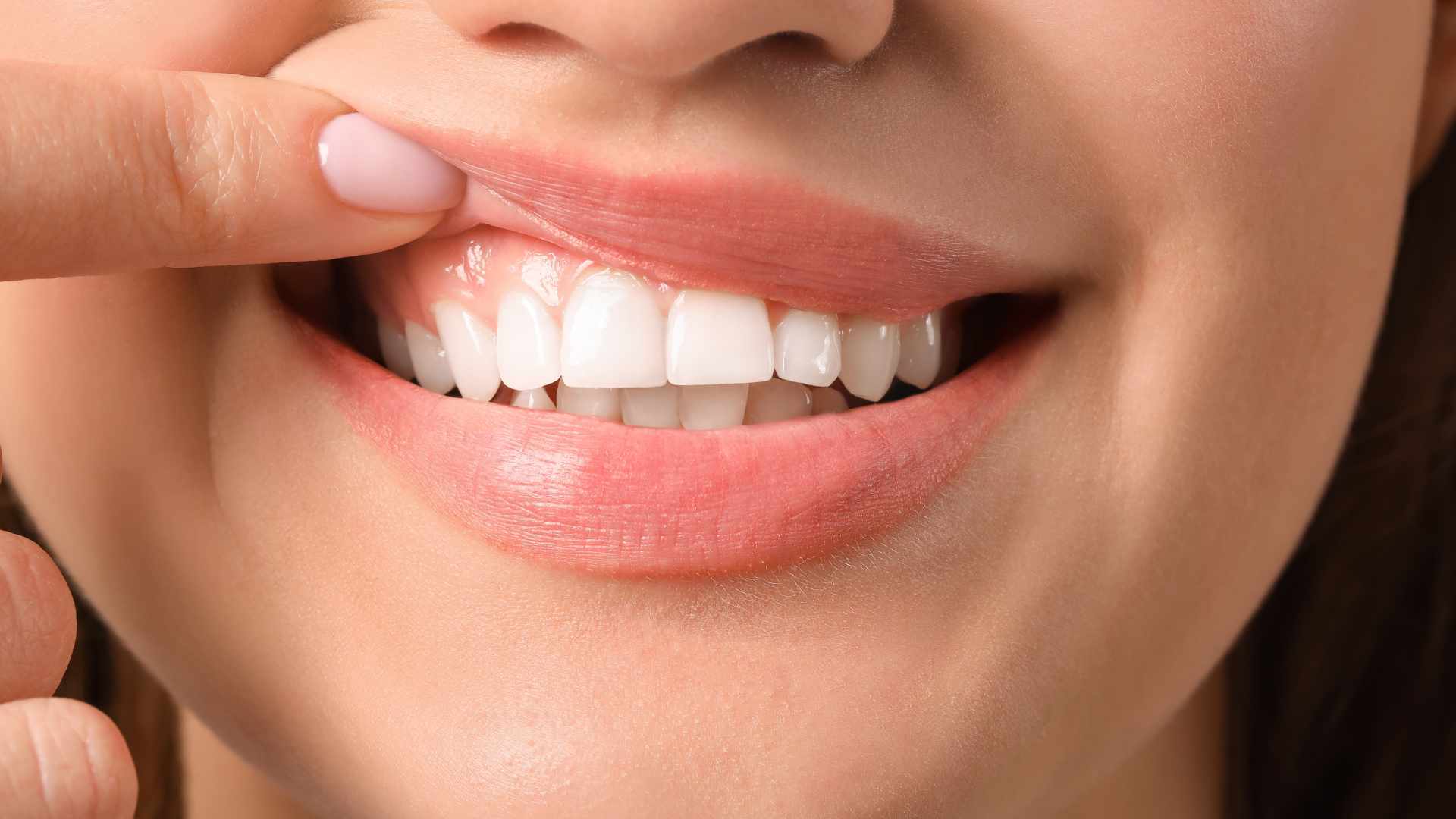
A gummy smile, also known as excessive gingival display, occurs when a larger amount of gum tissue is visible above the upper teeth when a person smiles.
This can make the visible teeth appear shorter or create a different balance between the teeth, gums and lips.
The appearance can have several different causes, so the appropriate treatment depends on which structures are contributing to the excessive gum display.
Excessive gum display can result from one factor or a combination of several anatomical features.
Some people naturally have more visible gum tissue due to inherited anatomical characteristics.
The upper lip may move higher than usual during smiling, exposing more of the gums.
Teeth that do not fully emerge from the surrounding gum tissue may appear shorter and increase visible gum area.
Certain skeletal or jaw relationships may contribute to greater gum exposure when smiling.
Different treatment methods address different causes of excessive gum display.
Excess gum tissue may be carefully reshaped to create a more balanced gum line and reveal more of the natural tooth surface where clinically appropriate.
In selected cases where upper lip movement contributes to excessive gum exposure, a lip repositioning procedure may be considered.
When tooth alignment or position contributes to the gummy appearance, orthodontic treatment may be used to improve tooth and smile proportions.
When excessive gum display is related primarily to skeletal or jaw structure, treatment planning may involve more advanced maxillofacial assessment.
There is no single procedure that is appropriate for every gummy smile. The gums, teeth, lip movement and facial proportions need to be evaluated together before deciding on a treatment approach.
The dentist assesses gum height, contour and the amount of tooth surface that is visible.
Tooth length, alignment and eruption are reviewed to understand their role in the smile proportions.
Upper lip movement during smiling can help determine whether the lip contributes to excessive gum display.
More complex cases may require evaluation of the underlying skeletal relationship.
Treatment can improve the visual relationship between the teeth, gums and lips.
Gum contouring may reveal more natural tooth structure where excess gum tissue covers the teeth.
Correcting the main cause may help create more harmonious proportions across the smile.
Treatment can be adapted according to the patient's anatomy and aesthetic goals.
Gum display, tooth proportions, lip movement and smile symmetry are assessed.
The dentist determines whether the main contributing factor is gum tissue, tooth position, lip movement or jaw anatomy.
The most appropriate option or combination of treatments is selected according to the findings.
Treatment is completed and healing, smile proportions and the final result are reviewed as required.
The most appropriate approach depends on why excessive gum tissue is visible when you smile. Clinical assessment helps determine whether the main factor is gum tissue, tooth position, lip movement or jaw structure.
Common questions about excessive gum display and available treatment approaches.