
CBCT / 3D Imaging
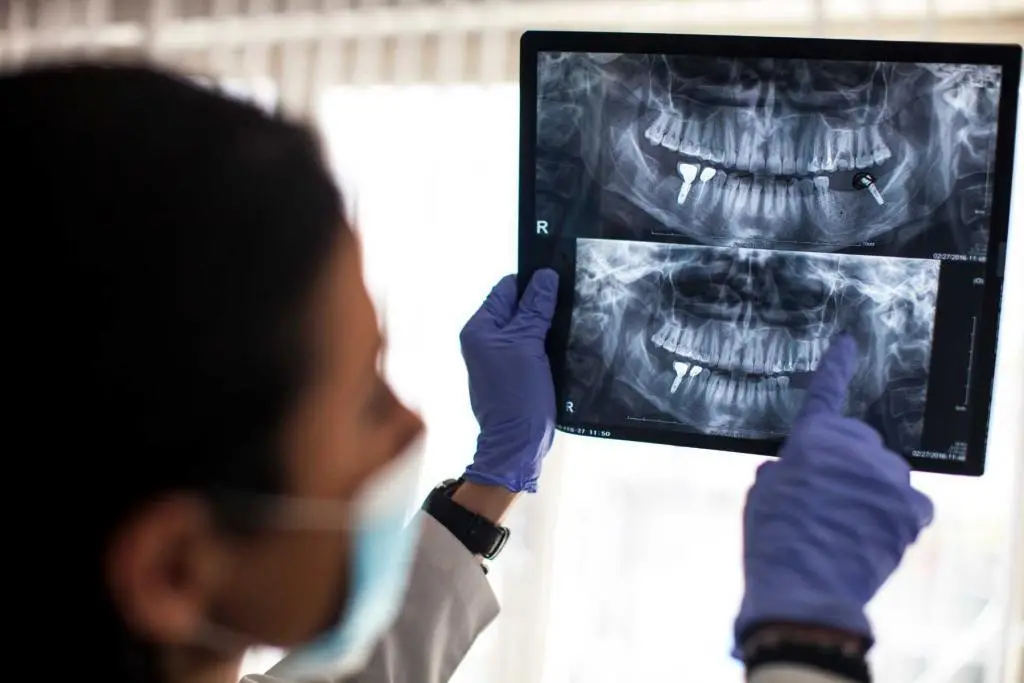
Three-dimensional imaging provides detailed information about jawbone volume, teeth and important anatomical structures for implant planning.
Full-mouth dental implant treatment is designed for patients with extensive or complete tooth loss who require a comprehensive fixed restoration supported by carefully planned dental implants.
Full-mouth dental implant treatment is a comprehensive approach for replacing most or all teeth in the upper jaw, lower jaw or both jaws.
Rather than replacing every missing tooth with an individual implant, a carefully planned number of dental implants can provide support for larger fixed restorations.
Implant number, implant position, available bone, prosthetic design and bite are assessed together when planning a full-mouth rehabilitation.
Full-mouth implant treatment begins with an individual assessment of your dental history, expectations, jaw anatomy and the condition of your remaining teeth.
Three-dimensional imaging provides detailed information about jawbone volume, teeth and important anatomical structures for implant planning.
Digital scanning can capture the anatomy of the mouth and provide information for restorative and bite planning.
Digital information can be used to plan implant position, prosthetic requirements and the overall sequence of treatment.
The number of implants depends on your jawbone, anatomy, restorative plan and the clinical condition of each arch.
The existing treatment information describes six to eight implants as a common full-arch approach for the upper jaw.
The current page describes a minimum of approximately six implants for full-mouth treatment of the lower jaw.
For both jaws together, the existing treatment plan describes approximately twelve to fourteen implants in many full-mouth cases.
Full-mouth implant treatment is not based on a single standard implant configuration. Bone availability, the condition of existing teeth and the intended fixed restoration all influence the final plan.
Detailed examination and dental imaging are therefore important before implant number and positioning can be confirmed.
Dental history, remaining teeth and jawbone are assessed using clinical examination and appropriate imaging.
Required teeth are managed and the planned dental implants are positioned according to the treatment plan.
Time is allowed for the implants to integrate with the surrounding jawbone before the permanent restoration.
The final implant-supported restoration is planned, fitted and checked for bite, function and appearance.
The existing treatment information describes two visits to Marmaris for many full-mouth implant patients, with a healing period between implant surgery and the final fixed teeth.
Examination, imaging, final planning and implant surgery are carried out during the first visit. Temporary prosthetic options may also be discussed or provided where appropriate.
The current page describes a healing and osseointegration period of approximately two to four months, with some sections describing around three to four months.
Patients return after healing for impressions, bite and restorative stages leading to the final fixed porcelain teeth.
The existing page features several established implant and dental technology systems.





A full-mouth implant package cannot be accurately priced without first determining the clinical requirements of the individual case.
The number of implants needed to restore the upper, lower or both jaws is one of the main factors affecting treatment cost.
Different implant systems have different manufacturing, research, distribution and component costs.
Bone grafting, sinus lifting, tooth extraction or other preparatory procedures may influence the overall treatment plan and price.
The existing page lists example package ranges based on implant quantity and brand. These figures should be treated as indicative rather than as a guaranteed final treatment price, since individual surgical and restorative requirements can change the total cost.
The period immediately after implant surgery and the following osseointegration phase are important parts of full-mouth implant treatment. Individual postoperative instructions should always be followed.
Softer foods may be recommended during the early recovery period to avoid unnecessary pressure on recently placed implants.
Any medication prescribed by your treating dentist should be used according to your individual postoperative instructions.
Oral hygiene remains important during healing. Cleaning methods may be modified temporarily around recent surgical areas.
Healing and implant stability should be reviewed before progressing to the permanent fixed restoration.
Common questions about full-mouth implant treatment and travelling to Turkey for treatment.